

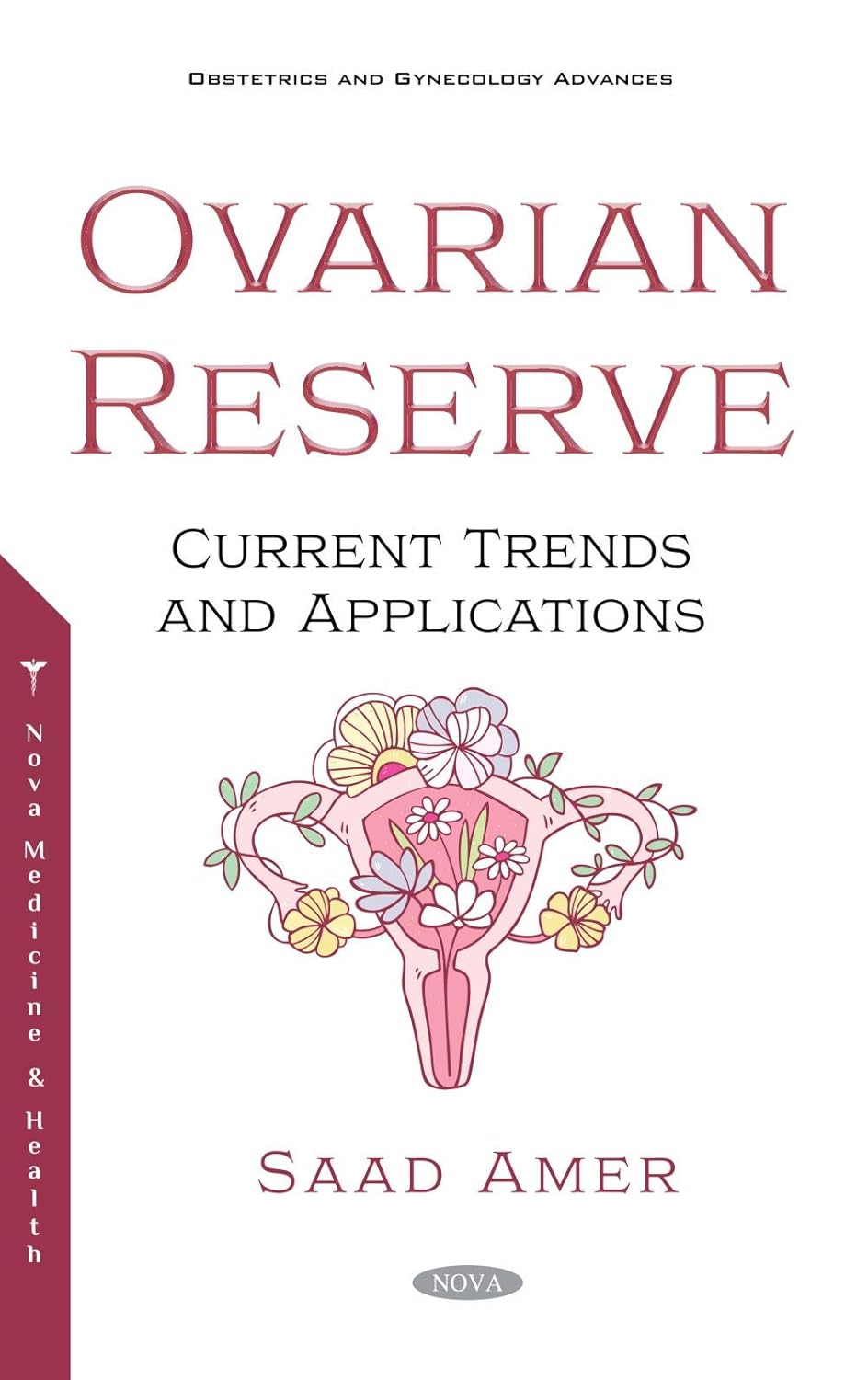
This is the first book that offers a comprehensive and in-depth account of the current state of knowledge on the ovarian reserve and its clinical applications in gynecology and reproductive medicine. The term “ovarian reserve” is commonly used to describe the total number of remaining primordial follicles, a key determinant of a woman’s fertility potential.
Since its introduction in the late 1980s during the early days of assisted reproduction technology, the concept of ovarian reserve has grown significantly in importance. This is evidenced by the exponentially increasing number of publications on the subject. Over the years, a wide range of ovarian reserve markers have been developed, starting with the serum follicle-stimulating hormone level in 1988, and most recently, the anti-Müllerian hormone in 2002.
This book begins with a detailed exploration of the physiology of the ovarian reserve, including early ovarian development, follicular dynamics, and the natural history of primordial follicles. It then provides a comprehensive overview of various biochemical, sonographic, and dynamic markers and their current applications.
- A special chapter is devoted to anti-Müllerian hormone, the most extensively researched and widely used ovarian reserve marker.
- The role of anti-Müllerian hormone in polycystic ovarian syndrome and its clinical utility is discussed in a separate chapter.
Additionally, the book delves into the clinical applications of ovarian reserve testing in various reproductive disorders, including early ovarian aging, diminished ovarian reserve (both pathological and iatrogenic), poor ovarian response during assisted reproduction technology, and premature ovarian insufficiency
Authors:
Saad Amer (Editor)
Edition:
1st
Publication Date:
December 1, 2020

Reviews
There are no reviews yet.